


In the construction and manufacturing industries, fasteners play a crucial role in ensuring the strength, safety, and durability of structures. Among the many types of fasteners available, coil nails have become a popular choice for contractors, builders, and manufacturers due to their efficiency and reliability. However, one critical factor that determines the performance of these fasteners is holding power. Understanding holding power in coil nails helps builders select the right product for their projects and ensures that structures remain secure over time.
This article explores what holding power is, the factors that influence it, and how choosing the right coil nails can significantly improve construction quality and safety.
MỤC LỤC BÀI VIẾT
What Is Holding Power?

Holding power refers to the ability of a nail to remain firmly embedded in a material and resist withdrawal or loosening under load or stress. In simple terms, it measures how well a nail can keep two materials connected even when subjected to forces such as vibration, movement, weight, or environmental changes.
In construction, holding power is particularly important because nails are often used to secure structural components such as wood framing, roofing materials, pallets, and siding. If a nail has poor holding power, it may loosen over time, potentially leading to structural instability or failure.
For coil nails, which are commonly used with pneumatic nail guns, holding power is influenced by several design and material characteristics.
Why Holding Power Matters in Construction
Strong holding power ensures that connections remain secure throughout the lifespan of a structure. When nails fail to maintain a strong grip, several issues can occur:
Structural weakness – Loose fasteners can weaken the connection between materials.
Safety hazards – Components such as roofing or siding panels may detach under wind or stress.
Increased maintenance costs – Poor fasteners may require repairs or replacements sooner.
Reduced durability – Structures exposed to movement or environmental conditions rely heavily on strong fastening systems.
For industries such as housing construction, pallet manufacturing, and furniture production, choosing coil nails with excellent holding power helps maintain product quality and reliability.
Key Factors That Affect Holding Power in Coil Nails

Several technical factors determine how well a coil nail performs in holding materials together. Understanding these factors can help builders and procurement teams choose the most appropriate fastener for their applications.
1. Nail Shank Design
The shank, or body of the nail, is one of the most important features affecting holding power. Different shank types are designed to enhance grip within the material.
Common coil nail shank designs include:
Smooth shank nails – These have a plain surface and are easy to drive into materials. However, they generally offer lower holding power compared to other designs.
Ring shank nails – These nails feature circular ridges along the shank that create friction and mechanical locking within the wood fibers. They provide significantly greater withdrawal resistance.
Screw shank nails – Designed with a spiral pattern, these nails rotate as they enter the material, increasing their grip and making them highly resistant to pulling out.
For projects requiring strong and long-lasting connections, ring shank and screw shank coil nails are often preferred.
2. Nail Length and Diameter
The size of the nail also plays a critical role in holding power.
Longer nails penetrate deeper into the base material, creating a stronger bond between connected components. However, the nail must be appropriately sized for the material thickness to avoid splitting or over-penetration.
Diameter is equally important. Thicker nails typically offer greater strength and resistance to bending, while thinner nails may be suitable for lighter applications where minimal material damage is desired.
Choosing the right balance between length and diameter ensures optimal holding performance.
3. Material Quality
The type and quality of steel used to manufacture coil nails greatly influence their strength and durability.
High-quality steel provides:
Better tensile strength
Improved resistance to bending
Greater durability under load
Low-quality materials may result in nails that bend, break, or lose holding power over time. Manufacturers that follow strict quality control processes ensure that their nails meet international standards for strength and performance.
4. Surface Coating and Treatment
Surface treatments and coatings are often applied to coil nails to improve performance in various environments.
Common coatings include:
Galvanized coatings for corrosion resistance
Vinyl coatings that create friction and increase holding power
Mechanical galvanization for outdoor applications
Vinyl-coated nails, for example, generate heat through friction when driven into wood. This heat slightly melts the coating, which then acts like an adhesive as it cools, enhancing the nail’s grip.
These treatments not only improve holding power but also extend the lifespan of the fastener in harsh conditions.
5. Base Material Properties
The material being fastened also affects nail performance.
For example:
Hardwood typically provides stronger holding power than softwood because of its dense structure.
Softwood may require specialized shank designs to improve grip.
Engineered wood products such as plywood or OSB may have different withdrawal resistance characteristics.
Contractors must consider the properties of the base material when selecting coil nails to ensure optimal results.
6. Installation Method
Proper installation plays a significant role in achieving maximum holding power.
Coil nails are usually driven using pneumatic nail guns, which provide consistent force and depth. However, incorrect settings or improper use can reduce the effectiveness of the fastener.
Important installation considerations include:
Correct air pressure settings
Proper nail gun alignment
Ensuring nails are driven flush rather than overdriven
Using compatible nail guns designed for the nail type
Consistent installation practices help ensure each nail performs as intended.
Testing Holding Power
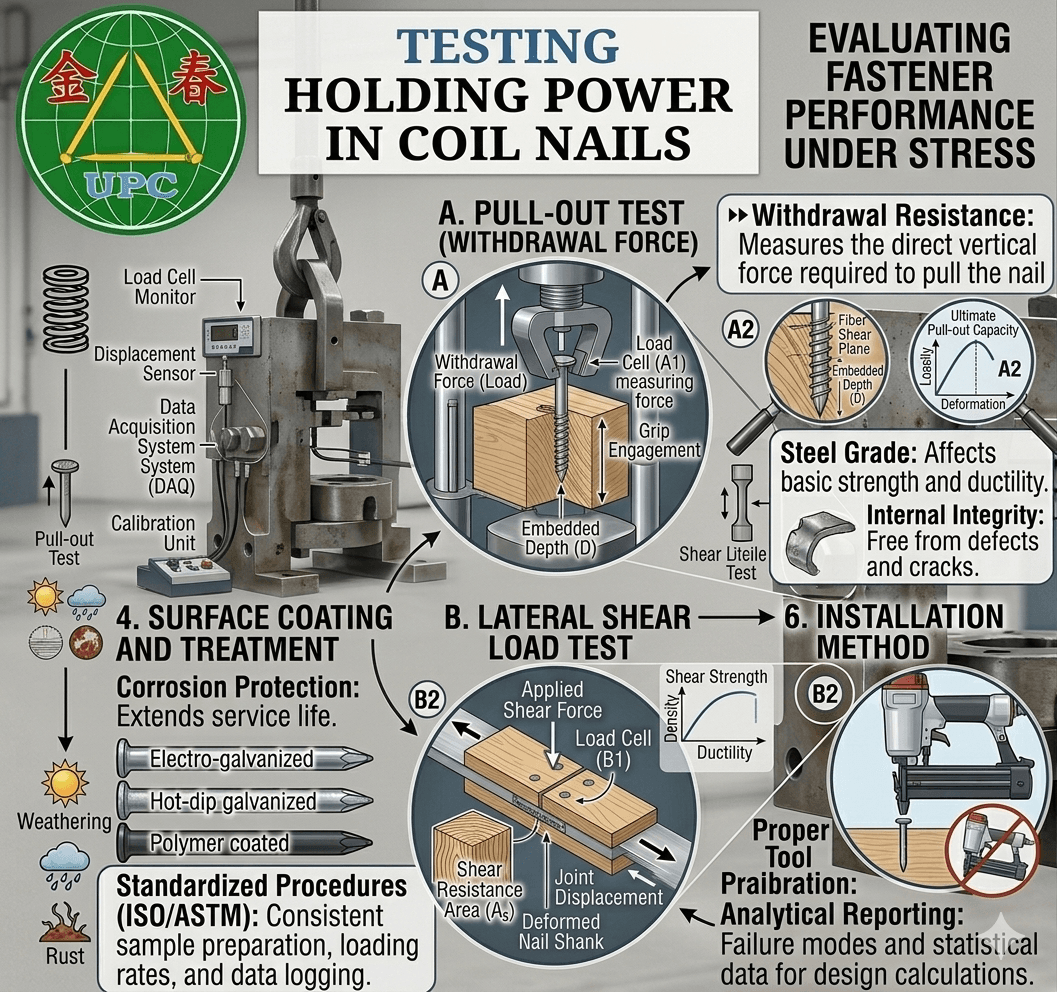
Manufacturers and construction professionals often evaluate holding power through withdrawal tests. These tests measure the force required to pull a nail out of a material.
During testing:
Nails are driven into a standardized material sample.
A machine applies force to extract the nail.
The maximum force required for removal is recorded.
Higher withdrawal force indicates stronger holding power. These tests help manufacturers refine nail designs and ensure compliance with industry standards.
Applications That Require High Holding Power
Many construction and industrial applications demand coil nails with strong holding capabilities.
Framing and Structural Construction
Structural framing requires fasteners that can withstand heavy loads and movement over time. Ring shank coil nails are commonly used in these applications due to their superior withdrawal resistance.
Roofing
Roofing materials are constantly exposed to wind, rain, and temperature changes. Nails with strong holding power help prevent shingles or panels from loosening or detaching.
Pallet Manufacturing
Pallets used in logistics and shipping must support heavy loads and repeated handling. High holding power ensures pallets remain intact during transportation.
Siding and Decking
Outdoor structures experience environmental stresses such as moisture, temperature fluctuations, and physical impact. Durable coil nails help maintain structural integrity in these demanding conditions.
How Manufacturers Improve Holding Power
Leading fastener manufacturers continually improve coil nail performance through advanced manufacturing techniques and strict quality control.
Key improvements include:
Precision-engineered shank designs
Consistent heat treatment processes
High-grade steel selection
Advanced coating technologies
Rigorous testing procedures
By investing in these innovations, manufacturers provide products that meet the evolving needs of modern construction projects.
Choosing the Right Coil Nails

When selecting coil nails for a project, buyers should consider several important factors:
Application type – framing, roofing, pallet production, etc.
Material compatibility – hardwood, softwood, or engineered wood
Environmental conditions – indoor or outdoor exposure
Required holding strength – based on structural demands
Compliance with construction standards
Working with reputable suppliers ensures that the chosen nails meet quality and performance expectations.
Conclusion
Holding power is one of the most important characteristics of coil nails, directly affecting the strength and durability of construction projects. Factors such as shank design, nail size, material quality, surface coatings, and installation techniques all contribute to the overall performance of these fasteners.
By understanding how holding power works and selecting high-quality coil nails designed for specific applications, builders and manufacturers can ensure secure connections, improved structural reliability, and longer-lasting results.
In today’s fast-paced construction industry, attention to seemingly small components like nails can make a significant difference. High-performance coil nails with superior holding power not only enhance efficiency during installation but also provide the strength and reliability needed to support safe and durable structures for years to come.
Contact information
UNITED NAIL PRODUCTS CO., LTD
Address: 16A8, Tra Noc Industrial Zone 1, Tra Noc Ward, Binh Thuy District, Can Tho City, VietNam
Phone: (+84) 986 831838; (+84) 292 242165
Email: sales5@unitednail.com
Thank you for reading this article, hope the information is useful to you