


MỤC LỤC BÀI VIẾT
Why Wire Gauge Is More Important Than You Think
In construction, steel fabrication, and industrial assembly, we often focus on large components — beams, machinery, or heavy-duty tools — and overlook the small details that hold everything together. Yet, it’s those details, such as binding wire, that often make the difference between a smooth workflow and a costly mistake.
Among all types of tying wire, black annealed tie wire remains one of the most widely used. Known for its softness, flexibility, and strength, it serves a simple but vital purpose: holding materials securely in place.
But not every project requires the same wire thickness. Choosing between 9G, 10G, 11G, or 12G can significantly impact work efficiency, strength, and cost-effectiveness. Let’s dive deeper into how to choose the right one for your needs.

Understanding the Basics: What Is Black Annealed Tie Wire?
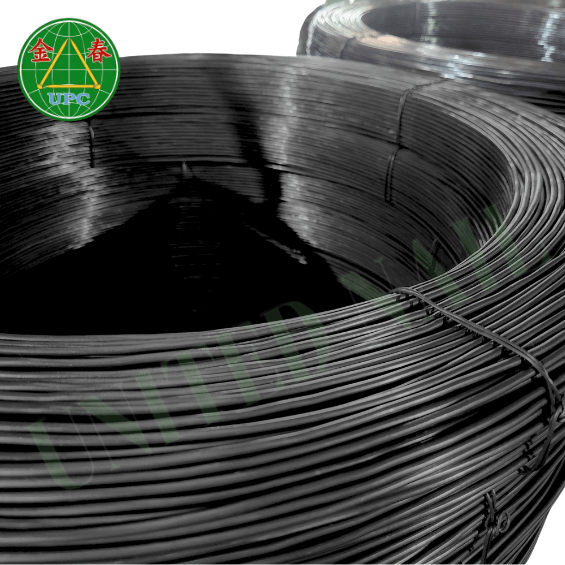
Black annealed wire is made from low-carbon steel that has been drawn to a specific diameter and then heat-treated in an oxygen-free environment. This process — known as annealing — increases ductility and reduces brittleness, giving the wire its signature black matte appearance.
The result is a wire that:
Is soft and easy to bend or twist
Maintains strong tensile strength
Has improved corrosion resistance
Is cost-effective for both manual and machine tying applications
This balance between softness and strength is why black annealed wire is a mainstay across industries.
Decoding Wire Gauge: 9G, 10G, 11G, 12G
“Gauge” refers to the diameter of the wire, and here’s the rule of thumb:
The lower the gauge number, the thicker the wire.
Below is a simple breakdown:
| Gauge | Approx. Diameter (mm) | Relative Strength | Flexibility | Common Use |
|---|---|---|---|---|
| 9G | 3.76 mm | Very high | Low | Heavy construction, rebar tying, scaffolding |
| 10G | 3.25 mm | High | Moderate | General-purpose construction, fencing |
| 11G | 2.95 mm | Medium | High | Wire mesh making, packaging, industrial applications |
| 12G | 2.68 mm | Moderate | Very high | Gardening, light assembly, household use |
The choice of wire gauge affects:
Ease of twisting and tying
Load-bearing capacity
Durability and longevity under tension
Choosing correctly means saving both time and cost on site.
Factors to Consider When Choosing Wire Gauge
a. Project Type
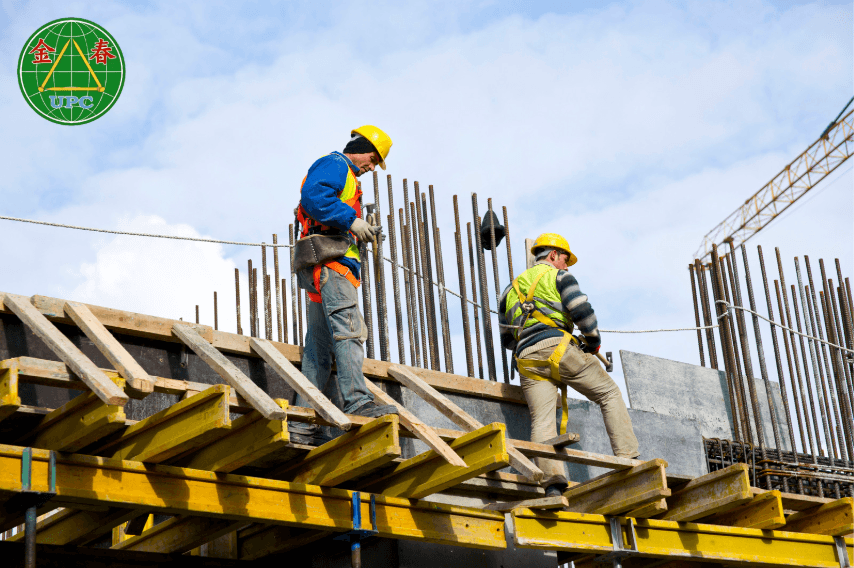
If you’re working on reinforced concrete (RC) structures, where wires must hold steel rebar together, a thicker wire (9G or 10G) is ideal. It can endure the stress of tying multiple bars and withstand concrete pressure during pouring.
For light structures, mesh, or packaging, 11G or 12G wire offers the flexibility and comfort needed for quick manual work.
b. Work Environment
Environments exposed to humidity, cement dust, or outdoor weather require wire with heat-treated coating — that’s where black annealed wire excels.
It’s not coated like galvanized wire, but its annealed surface provides natural oxidation resistance, sufficient for most construction uses.
c. Handling Method
Manual tying benefits from softer, thinner wire (11G–12G) since workers can twist it quickly without fatigue.
Automatic tying machines or rebar tying guns, on the other hand, perform better with 9G–10G wire, which feeds consistently without breaking.
d. Cost Efficiency
Heavier wire gauges cost slightly more per kilogram, but they also last longer and handle more load. The key is to match wire thickness with job requirements — not to over-specify or underuse.
The Science Behind the Annealing Process
Annealing isn’t just a buzzword — it’s what transforms ordinary wire into a construction-grade material.
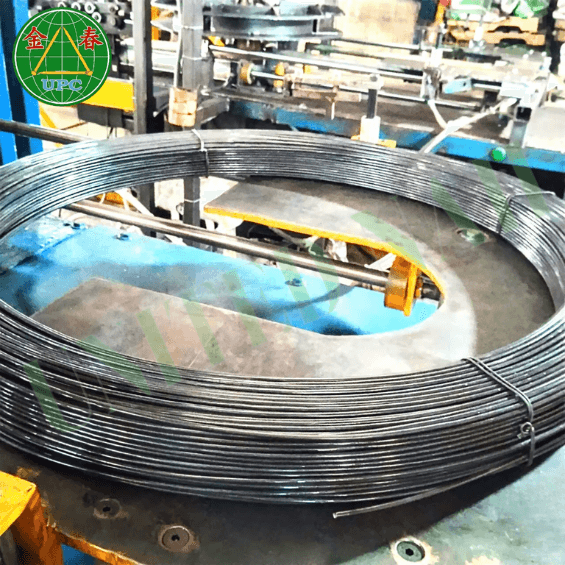
The process involves heating the steel wire to 800–900°C, then slowly cooling it in a controlled environment. This modifies the wire’s internal grain structure, resulting in:
Higher ductility (the ability to stretch without breaking)
Reduced internal stress
Uniform mechanical properties
Because of this, black annealed wire can be bent repeatedly without snapping — a property that galvanized or hard-drawn wires often lack.
Real-World Applications of 9G–12G Black Annealed Wire
Black annealed wire is used in countless ways across industries:
🏗️ Construction and Concrete Work
Tying rebar cages and mesh
Securing steel frameworks
Fixing components during formwork installation
🧱 Masonry and Brickwork
Supporting wall ties and brick rows
Holding rebar or mesh in position during mortar setting
🌾 Agriculture and Gardening
Tying fences and trellis systems
Bundling harvested crops
Supporting plant structures
⚙️ Industrial Manufacturing
Making welded mesh or wire baskets
Binding or packaging finished goods
Temporary fastening during production processes
📦 Packaging and Shipping
Securing pallets and bundles
Tying large cargo during transportation
Each industry values black annealed wire for its balance of softness, strength, and affordability.
Quality Indicators: How to Identify a Good Wire
A professional buyer or site engineer can easily tell the difference between a high-quality and low-quality wire. Here’s what to look for:
Uniform color – A deep, consistent black finish indicates proper annealing.
Smooth surface – Fewer sharp edges mean better processing and safety during handling.
Stable tensile strength – Ideally between 350–450 N/mm².
Flexible but not brittle – The wire should twist easily without cracking.
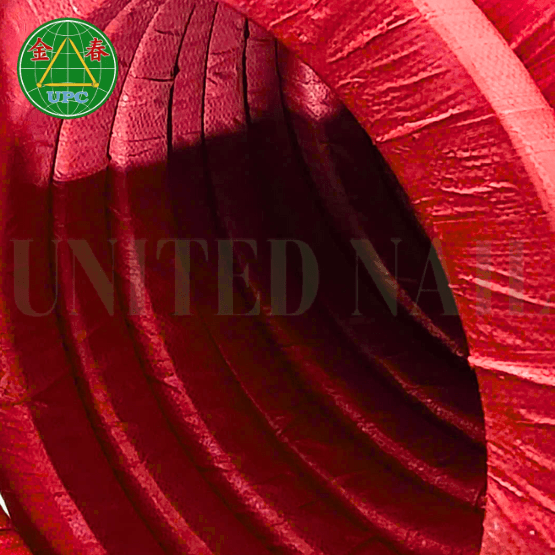
Neat coil packaging – Reduces tangling, saving time on site.
Manufacturers like United Nail (Vietnam) achieve this through advanced heat-treatment furnaces, precision drawing machines, and strict quality control at every stage.
Sustainability and Recyclability
With sustainability now a global priority, black annealed wire has an added advantage — it’s fully recyclable.
Made from low-carbon steel, it can be melted down and reused multiple times with minimal material loss.
Additionally, its long lifespan and low maintenance reduce waste on construction sites. For contractors aiming to meet green building standards, that’s a bonus point.
Common Mistakes When Choosing Wire Gauge
Even experienced builders sometimes make small but costly mistakes when selecting wire.
Here are a few to avoid:
❌ Using too thin wire (12G) for heavy rebar work → leads to snapping or loosening.
❌ Using too thick wire (9G) for manual tying → causes hand fatigue and slows productivity.
❌ Ignoring tensile strength → poor-quality wire may stretch too much and weaken bindings.
❌ Choosing non-annealed wire → harder to twist and may corrode faster.
The takeaway: always match the gauge, application, and quality certification to your exact project type.
The United Nail Advantage
With over 25 years of manufacturing experience, United Nail has established itself as one of Vietnam’s leading producers of industrial nails and binding wire.
Our black annealed wire (9G–12G) is made from high-grade steel, processed on modern annealing lines, and tested rigorously for:
Tensile strength and elongation
Diameter tolerance
Surface uniformity
We offer:
Custom coil weights (50-100LBS)
Private labeling and OEM packaging
Fast delivery worldwide
Customers across Asia, the Middle East, Europe, and South America rely on United Nail for consistent quality and professional service.
Final Thoughts: Small Detail, Big Impact
Choosing the right wire gauge might seem like a minor technical decision, but it can significantly affect your project’s efficiency, durability, and cost.
A wire that’s too hard will slow you down; one that’s too soft won’t hold the structure securely.
That’s why construction professionals and distributors around the world continue to trust black annealed tie wire 9G–12G — it simply delivers the right balance between strength, flexibility, and reliability.
And when quality assurance matters, United Nail stands ready as your trusted manufacturing partner in Vietnam.
Contact Information
UNITED NAIL PRODUCTS CO., LTD
Specializing in high-quality nails and small coil wire production
Thank you for taking the time to read this article. We hope the information proves helpful to you.