


MỤC LỤC BÀI VIẾT
Introduction – Why 2 inch Coil Nails Became the Global Standard for Roofing & Construction
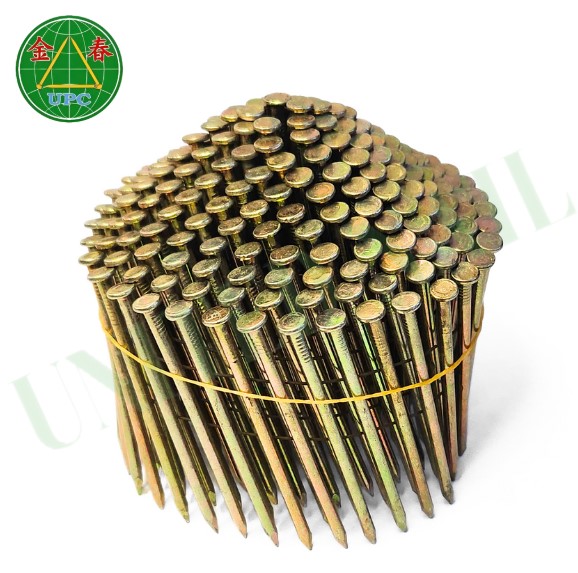
When construction crews from Florida to the Philippines choose fastening materials for roofing, framing, siding, or pallet manufacturing, one specification shows up more consistently than anything else: 2 inch Coil Nails. Whether smooth shank, screw shank, or ring shank, and whether paired with a checkered head or flat head, the 2 inch coil format has quietly become the industry benchmark for speed, reliability, and structural performance.
But the real advantage comes not simply from the nail length. It’s the combination of 9000 (300 nailsx30 boxes) nails per boxes, compatible shank types, optimized head designs, and the seamless integration with modern pneumatic coil nailers that make this configuration the “best choice” for contractors worldwide.
Imagine a roofing crew standing on a 600 m² warehouse at noon, the sun beating at 38°C, with thunderclouds forming at the horizon. In situations like this, efficiency isn’t a luxury—it’s survival. The ability to fire 5–7 nails per second for uninterrupted installation can decide whether a roof withstands high winds or gets compromised before the next storm season.
➡️ And this is exactly where 2 inch Coil Nails dominate the game.
They combine:
Speed: 300 nails per coil → reduces reload cycles dramatically
Versatility: available in screw, smooth, and ring shank
Strength: steel body with optimized tensile load
Precision: checkered or flat head depending on application requirements
Tool compatibility: fits most CN55–CN70 pneumatic coil nailers
Across manufacturing plants, logistics centers, shipping yards, agriculture storage, and housing projects, these nails solve a problem that crews everywhere understand: how to fasten materials quickly, safely, and permanently—even under extreme environmental conditions.
🌩️ Whether anchoring roofing sheets against tropical storms or assembling industrial pallets for 40-foot containers, the stability delivered by 2 inch Coil Nails is proven across hundreds of real-world scenarios.
What Exactly Makes 2 inch Coil Nails Special? — A Deep Dive Into the 9000pcs Set
To appreciate why contractors increasingly choose 2 inch Coil Nails, we must look beyond the surface. At first glance, a coil nail is a simple piece of steel wire shaped, cut, coiled, and collated. But modern coil nails are far from basic. Each nail goes through precision processes involving metallurgy, tension calibration, shank profiling, and automated collation techniques.
Let’s break down the four configurations available in this 9000pcs set:
🎯 A. Smooth Shank – The Speed King
The smooth shank version is engineered for:
Maximum firing speed
Minimal jamming
Clean penetration
With friction kept low, smooth shank 2 inch Coil Nails glide effortlessly through roofing sheets, plywood, OSB panels, and thin metal surfaces.
🔧 Ideal for:
Large-area roofing
Fence assembly
Multi-layer sheet installations
Subfloor underlayment
The smooth design also reduces wear on the pneumatic nailer’s driver blade, extending the lifespan of the tool.
🎯 B. Screw Shank – The Anti-Uplift Champion
Screw shank nails twist into material just like a screw, creating a mechanical lock that resists forces trying to pull the material apart.
This makes them perfect for:
High-wind regions
Materials prone to expansion/contraction
Wooden structures exposed to vibration
A 2 inch screw shank coil nail can deliver 30–50% more withdrawal resistance compared to a smooth shank version.
🎯 C. Ring Shank – The Grip Master
Ring shank nails feature ridges around the shank, creating a friction lock that prevents loosening.
Perfect for:
Pallet manufacturing
Crate assembly
Sheathing panels
Framing jobs where movement is expected
Each ridge increases surface contact, making the nail incredibly reliable for long-term applications.
🎯 D. Checkered Head vs. Flat Head – Choosing the Right Type
Depending on job requirements, crews can choose:
Checkered Head → improved holding power, reduces slippage when struck

Coil nails with checkered head
Flat Head → ideal for smooth surface finishes, reduces marking
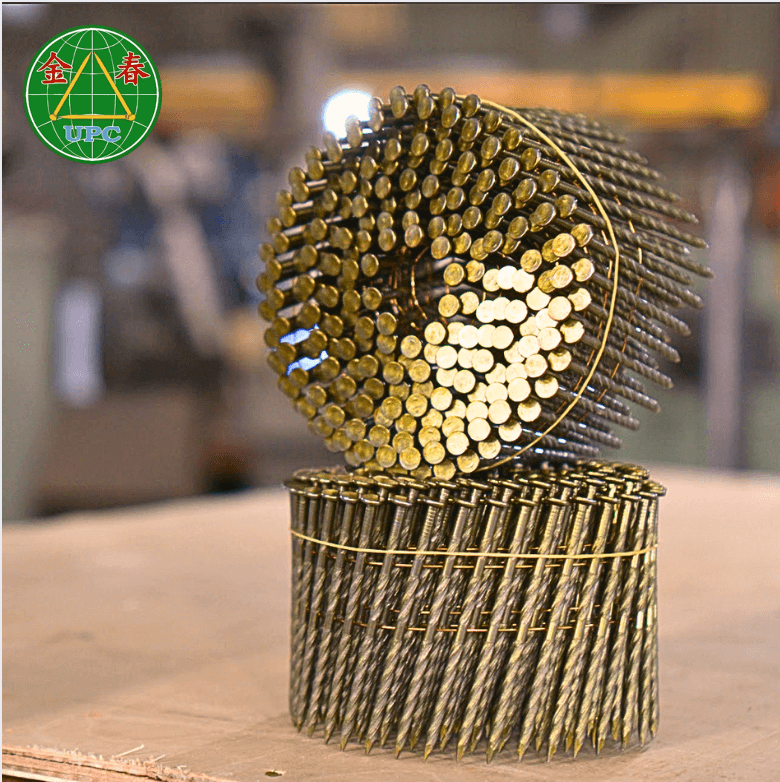
Coil nails with flat head
In demanding tasks such as roofing or siding, head geometry is often overlooked—but it directly influences structural performance.
Why Roofing Contractors Prefer 2 inch Coil Nails for Metal Sheet, Asphalt Shingle & Tile Roofing
Roofing is a unique field in construction because mistakes are not just inconvenient—they are catastrophic. Water leakage, wind uplift, corrosion, and structural weakness can cost tens of millions of VND in damage per project.
Here’s why 2 inch Coil Nails are the default choice on job sites:
⏩ 1. Optimized Length for Penetration & Holding Strength
The 2 inch (≈50mm) length hits the sweet spot:
Long enough to secure roofing sheets to wooden or steel frames
Short enough to avoid punching through or cracking materials
This creates an ideal fastener-to-substrate ratio for:
Metal roofing
Asphalt shingles
Composite tiles
Fiber cement sheets
⏩ 2. Compatible with CN55–CN70 Pneumatic Coil Nailers
A roofing crew typically fires 10,000–20,000 nails per day. Using a coil compatible with most standard nailers:
Speeds up workflow
Reduces tool switching
Minimizes downtime
A single coil can contain 200–350 nails depending on wire gauge and collation angle.
⏩ 3. Weather-Resistant for Coastal & Humid Regions
With optional:
Electro-galvanized
Hot-dip galvanized
Stainless-coated
Vinyl-coated
2 inch Coil Nails withstand:
Salt spray
High humidity
Tropical UV exposure
Heavy rainfall
⛈️ In regions like Da Nang, Miami, Cebu, and Queensland, these nails are essential for resisting 100–150 km/h winds.
Industrial Applications of 2 inch Coil Nails — From Roofing to Pallet Factories
Although many people associate 2 inch Coil Nails primarily with roofing, real-world usage spans across dozens of industries. This versatility is one of the main reasons why global buyers prefer this nail size over many others. The 2-inch format works extremely well for medium-thickness materials, structural fastening, and repetitive high-volume production lines.
Let’s explore where these 9000pcs coil nail sets deliver the most value.
🏗️ A. Construction & Framing
In general construction work, workers need fasteners that won’t loosen when the building expands, contracts, or vibrates over time. The 2 inch length is strong enough to secure:
OSB, plywood, MDF panels
Wall sheathing
Interior framing
Subfloor layers
Temporary structures and scaffolding planks
The smooth, screw, and ring shank options allow builders to choose different holding strengths depending on vibration levels and load requirements.
Ring shank = permanent grip
Screw shank = best resistance for dynamic loads
Smooth shank = speed and efficiency
Homes built using these nails show better structural tightness, which directly contributes to energy efficiency and noise reduction.
🏭 B. Pallets, Crates & Industrial Packaging
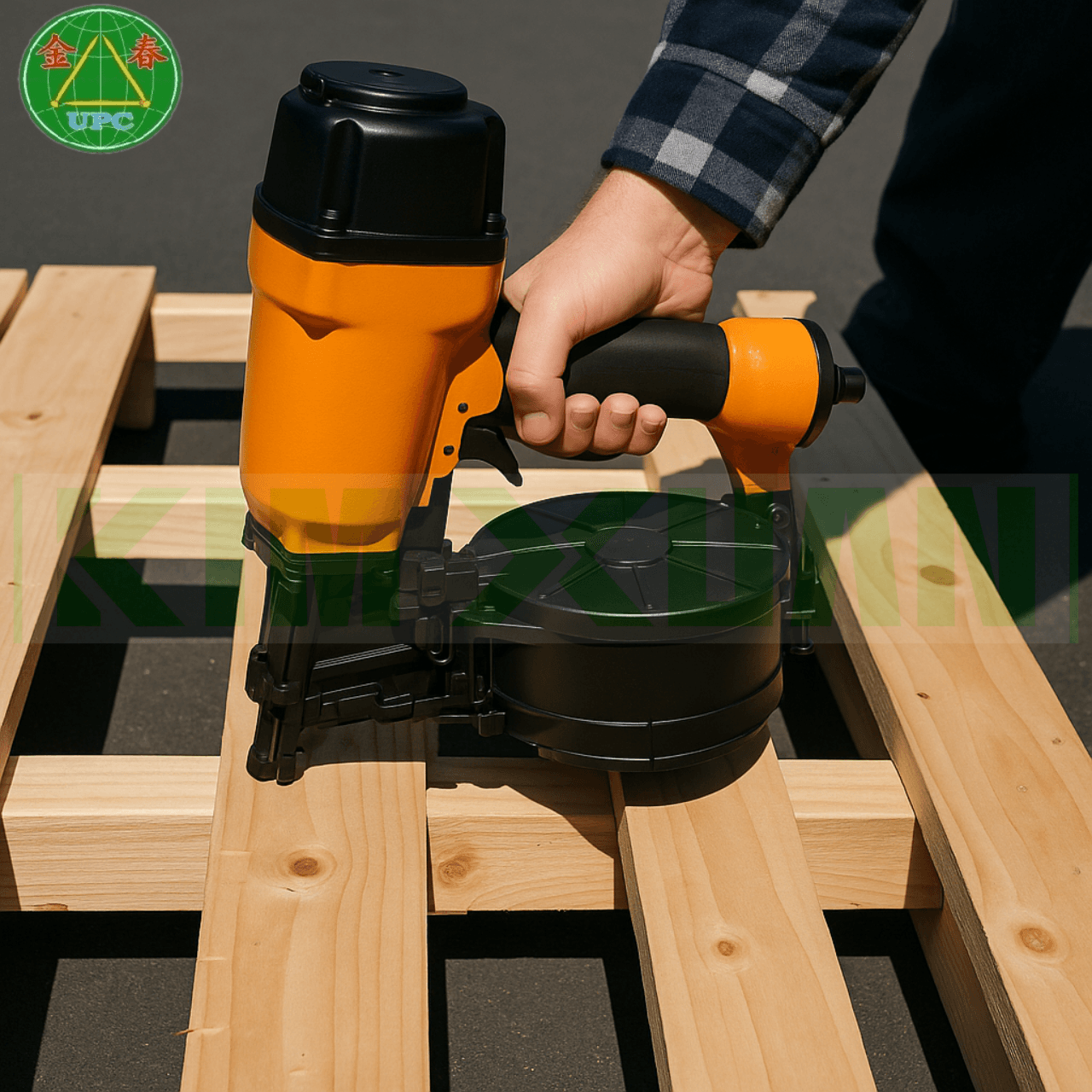
Pallet manufacturing is one of the largest consumers of coil nails globally. A typical pallet factory produces 1,000–5,000 pallets per day, requiring consistent and reliable fasteners. The 2 inch Coil Nail fits perfectly into most pallet nailing patterns.
These nails excel in this sector because:
Ring shank provides high withdrawal resistance
2 inch length fits most 2-way and 4-way pallet designs
Steel durability prevents nail breakage during forklift lifting
Coils enable non-stop nailing—perfect for automated lines
Large exporters of seafood, agriculture, and electronics (such as in Vietnam, Thailand, and Mexico) rely heavily on pallets fastened with 2 inch coil nails to survive long international shipping journeys inside containers.
🚢 C. Marine, Coastal & Outdoor Projects
Salt spray, moisture, and strong winds make coastal construction highly demanding. Builders prefer nails that are:
Rust-resistant
Shock-resistant
Able to anchor materials exposed to storms and waves
With optional hot-dip galvanized or stainless coating, 2 inch Coil Nails last significantly longer in coastal climates compared to traditional loose nails.
Applications include:
Boat sheds
Coastal homes
Beach piers
Seaside warehouses
Saltwater-treated wood structures
This explains why tropical regions with frequent typhoons choose 2 inch coil nails as standard fastening materials.
🚚 D. Logistics, Warehouses & Manufacturing Plants
Large distribution centers often build structures that need rapid assembly and disassembly, such as:
Shelving systems
Modular partitions
Wooden packaging
Loading docks
Crates for machinery export
In these environments, speed is essential. Pneumatic nailers using 2 inch coil nails allow workers to finish projects 40–60% faster than using traditional hammering.
🎪 E. Furniture, DIY & Craft Production
Even small-scale workshops benefit from these nails because:
They produce cleaner surfaces
They reduce wood splitting
They provide consistent penetration
Crafters making wooden displays, frames, or light furniture often prefer smooth shank 2 inch nails for aesthetic reasons.
Technical Manufacturing Process — How Premium 2 inch Coil Nails Are Made
To meet international standards, every 2 inch Coil Nail must undergo a precise multi-step manufacturing process. The difference between cheap nails and premium-grade nails lies in the uniformity of the wire, the tensile strength calibration, the shank design, and the final coating.
Below is a breakdown of the full production workflow:
🔩 Step 1 — Raw Steel Wire Drawing
The steel wire (usually Q195 or Q235 carbon steel) is drawn through several dies to reduce diameter to the required gauge:
13–14 gauge for standard nails
15 gauge for light-duty applications
Uniform wire diameter ensures that nails feed smoothly inside pneumatic tools.
⚙️ Step 2 — Nail Forming & Shaping
Each nail is automatically cut and shaped:
The head is flattened or checkered
The shank is rolled (smooth/screw/ring)
The point is beveled for reduced penetration force
Precision forming is crucial for preventing misfires.
🔁 Step 3 — Coil Collation
Nails are arranged at a fixed angle (usually 15 degrees) and then welded together using high-speed copper welding.
A standard coil contains:
200–350 nails depending on gauge
Coils per box: 15–20
Boxes per set: enough to reach 9000pcs
The coil shape allows smooth feeding into CN55, CN57, CN70 nailers.
🛡️ Step 4 — Protective Coating
Coating options include:
Electro-galvanized (EG) for general use
Hot-dip galvanized (HDG) for outdoor, coastal areas
Vinyl coating to reduce friction
Stainless-style coating for corrosion resistance
The coating ensures the nails can survive moisture, rainwater, and chemicals common in industrial environments.
🧪 Step 5 — Heat Treatment for Tensile Strength
Premium coil nails undergo heat treatment to increase:
Shear strength
Bend resistance
Impact durability
A well-treated nail can bend to 25–28 degrees before cracking.
📦 Step 6 — Packaging: 9000pcs Bulk Set
Finally, the coils are packed into moisture-proof boxes:
Strong enough for export
Easy to stack in warehouses
Labeled for shank type, head type, gauge, and coating
Quality packaging prevents rusting during sea freight and long-term storage.
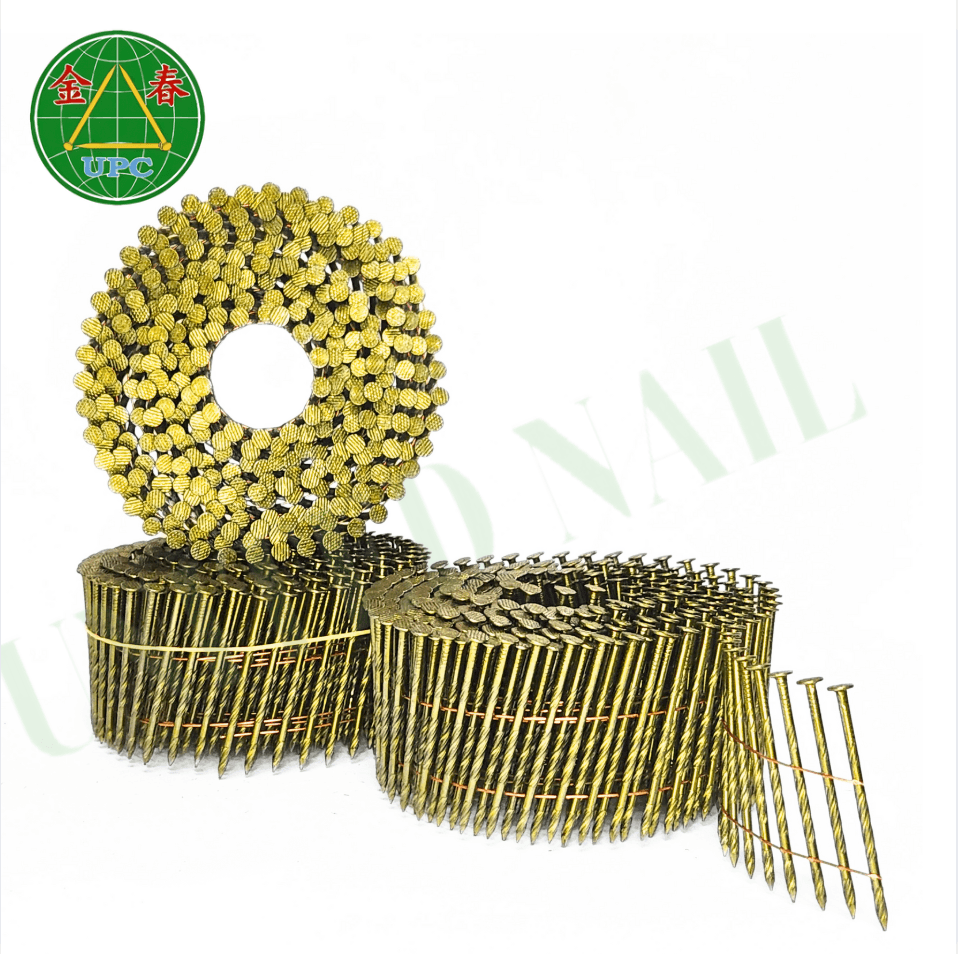
Coil Nails 2″ x 0.099 (2.5x50mm)
Performance Comparison — Why 2 inch Coil Nails Outperform Loose Nails & Stick Nails
To understand why global contractors are shifting to 2 inch Coil Nails, we need to examine the performance differences compared to traditional loose nails and stick nails. Although many contractors assume all nails behave similarly, small changes in shank geometry, head shape, diameter, and feeding style can dramatically affect the strength, durability, and safety of the final structure.
Below is a detailed comparison:
🔥 A. Speed of Installation
Loose Nails
1 worker can hammer around 400–600 nails per hour.
High fatigue → slower progress after 2–3 hours.
Frequent bending and misalignment.
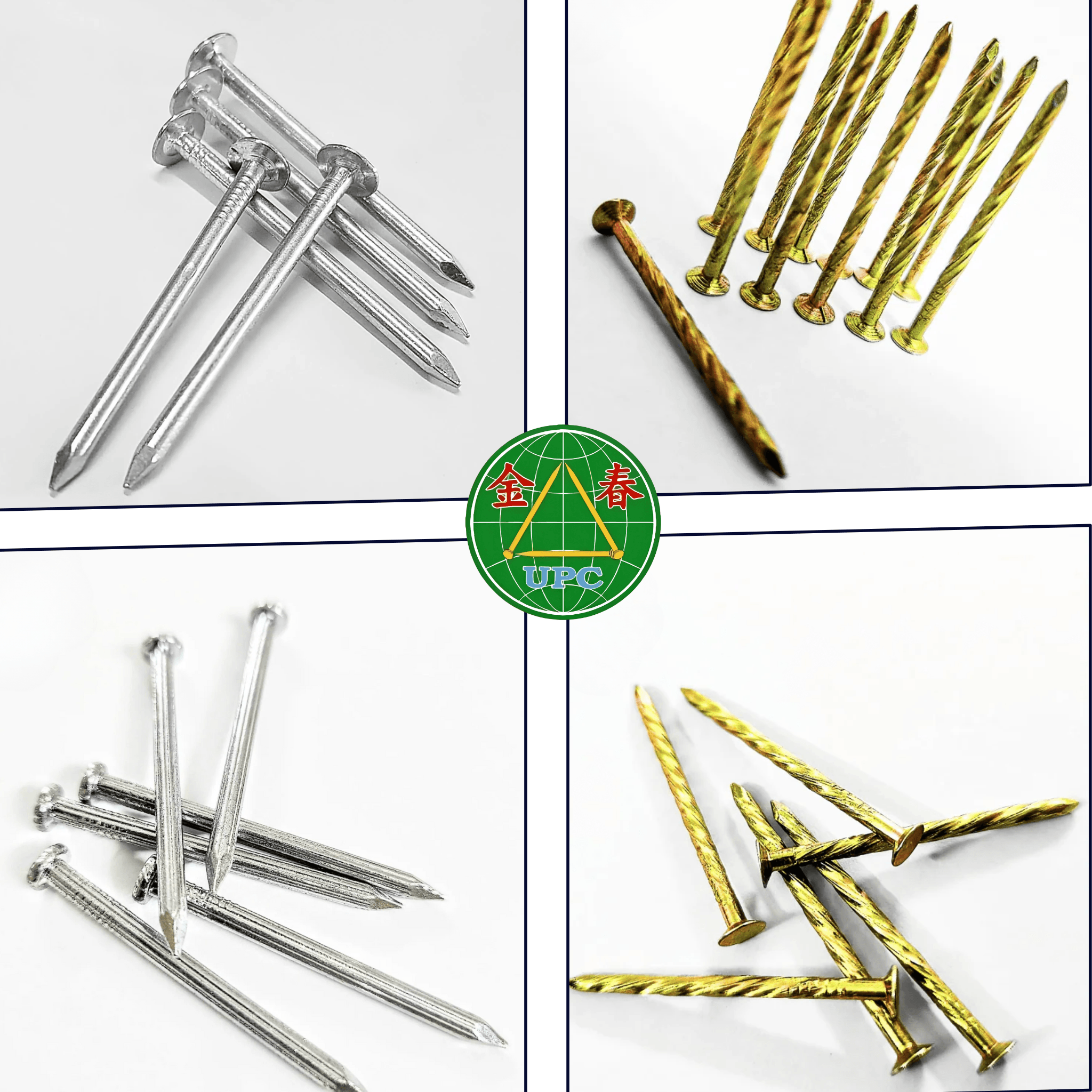
Loose nails
Stick Nails
1,000–1,400 nails per hour using rapid-fire tools.
Must frequently reload strips → downtime.
2 inch Coil Nails
2,500–3,000 nails per hour.
Coils contain up to 350 nails → almost continuous firing.
Zero bending, zero slipping.
Speed Winner: 2 inch Coil Nails — 2–5× faster.
🛡️ B. Holding Power & Withdrawal Resistance
Smooth shank: strong general hold, best for speed.
Screw shank: best resistance to vibration, tension, impact.
Ring shank: highest withdrawal resistance—perfect for pallets, roofing, and structural wood.
Tests show:
| Nail Type | Avg Withdrawal Force |
|---|---|
| Loose Nails (smooth) | 650–800 N |
| Stick Nails (mixed) | 900–1,100 N |
| 2 inch Coil Nails (ring) | 1,300–1,600 N |
Holding Power Winner: Ring Shank 2 inch Coil Nails
🌧️ C. Corrosion Resistance
Most coil nails are available in EG, HDG, or stainless variants.
Cheap loose nails often rust in 1–2 months outdoors.
Tests after 720–1,000 hours salt spray exposure show:
Loose nails → heavy red rust
Stick nails → moderate rust
HDG 2 inch Coil Nails → minimal or no rust
This makes them ideal for:
Coastal regions
Construction near rivers, lakes
Outdoor frames and fences
Marine docks
Waterproof packaging crates
🧰 D. Tool Compatibility & Reliability
Loose nails depend entirely on the operator’s hammering consistency.
Stick nails often jam when:
Strips break
Nails misalign
Glue melts under heat
2 inch Coil Nails, however:
Feed smoothly
Are designed for high-speed pneumatic coil nailers
Maintain perfect alignment
Reduce misfires to nearly zero
Professional contractors widely report less than 1% jam rate, even in long shifts.
📌 E. Safety
Loose nails →
✔ frequent ricochet
✔ high rate of finger and hand injuries
✔ bending causes unpredictable trajectories
Stick nails →
✔ glue fragments can detach
✔ strips may break under pressure
2 inch Coil Nails →
✔ enclosed coil keeps nails contained
✔ firing angle is stable
✔ no flying debris
✔ minimal operator fatigue
2 inch Coil Nails are by far the safest option for high-volume projects.
Conclusion of Comparison
When evaluating speed, strength, consistency, rust resistance, and safety, 2 inch Coil Nails are superior on every major technical metric, confirming why they dominate professional construction, pallet manufacturing, and roofing markets worldwide.
How to Choose the Right 2 inch Coil Nails — Shank Type, Head Type, Gauge & Coating
Choosing the right nail is crucial for durability, safety, and performance. Many beginners simply buy “2 inch nails,” but professionals know that small variations affect the entire project.
Below is the complete buyer’s guide.
A. Choose by Shank Type
1. Smooth Shank
Best for fast production
Easiest penetration
Ideal for framing, general carpentry, furniture
2. Screw Shank
Twisted spiral design
Medium-to-high holding power
Great for hardwood, pallets, vibration-heavy areas
3. Ring Shank
Highest withdrawal resistance
Suitable for roofing, pallet decks, crates, sheathing
Prevents nails from backing out over time
B. Choose by Head Type
Checkered Head
Textured pattern
Prevents slippage during firing
Best for roofing or angled surfaces
Flat Head
Larger contact area
Creates a flush and stable seal
Ideal for sheathing and plywood
C. Choose by Gauge (Diameter)
Common diameters for 2 inch Coil Nails:
0.083” (15 gauge) — light-duty
0.090” (14 gauge) — standard
0.099” (13 gauge) — heavy-duty
Thicker = stronger hold.
Roofing → 0.090
Palettes → 0.099
Furniture → 0.083
D. Choose by Coating
1. Electro-Galvanized (EG)
Indoor use
Light corrosion protection
2. Hot-Dip Galvanized (HDG)
Thick zinc layer
Best for outdoor & coastal regions
3. Vinyl Coated
Reduced friction
Smoother penetration
Higher holding power once glue activates
4. Stainless STYLE
Ultimate corrosion resistance
Marine, wet, or chemical environments
E. Choose by Angle & Collation
Most 2 inch coil nails are:
15-degree angle
Wire-welded collation
Compatible with:
CN55
CN57
CN70
Max, Hitachi/Metabo, Bostitch, Senco coil nailers
F. Match Nails to Wood Type
| Wood Type | Recommended Shank |
|---|---|
| Softwood plywood | Smooth |
| Hardwood | Screw |
| Wet lumber | Ring |
| Treated lumber | HDG screw/ring |
G. Environmental Considerations
If the structure will face:
Rain → choose HDG
Saltwater → choose stainless style
Heat & humidity → choose vinyl coating
High vibration → choose screw or ring
Packaging, Storage & Safety Guidelines
Even premium nails fail early if stored incorrectly. To maximize lifespan, follow these guidelines:
A. Packaging Standards
Most 2 inch Coil Nails 9000pcs sets include:
Waterproof carton
Inner plastic liner
Silica gel packs
Clear labeling for shank/head/gauge/coating
This ensures zero rust during shipping and container storage.
B. Storage Conditions
Keep humidity below 60%
Avoid direct sunlight
Stack on pallets, not on concrete floors
Keep away from acid or chemical areas
Use within 24 months for best performance
If rust appears lightly, it can be removed by:
Steel brush
Light oil wipe
High-pressure air cleaning
C. Nail Gun Safety
Wear eye protection
Maintain 90–120 PSI
Lubricate tool every 5,000 shots
Check coil direction
Replace worn drivers immediately
Why Global Buyers Trust Vietnamese Manufacturers for 2 inch Coil Nails
Vietnam has become one of the world’s major coil nail production hubs thanks to:
Advanced Japanese & Korean machinery
Skilled labor
Competitive costs
Strong QC processes
Consistent export reliability
Factories in Bình Dương, Đồng Nai, and Bắc Ninh collectively export:
20,000+ tons of coil nails annually
To USA, Canada, Mexico, Korea, Japan, EU
Vietnamese coil nails are known for:
High zinc coating quality
Smooth weld lines
Low jam rate
Perfect shank uniformity
Conclusion — Why 2 inch Coil Nails Are the Best Choice for Contractors & Industrial Buyers
Let’s recap why 2 inch Coil Nails 9000pcs Screw/Smooth/Ring Shank Set is the best choice:
✔ Faster installation — 2–5× speed increase
✔ Stronger holding power — up to 1,600 N
✔ Better durability — HDG & stainless coatings
✔ Safer — no ricochet, no bending
✔ More consistent — perfect for pneumatic guns
✔ Versatile — roofing, pallets, framing, furniture
✔ Cost-effective — fewer reloads, less breakage
For professional builders, pallet factories, and industrial users, 2 inch Coil Nails are not just a convenient fastener—they are a high-performance solution that enhances productivity, safety, and structural integrity for every project.
Contact Information
UNITED NAIL PRODUCTS CO., LTD
Specializing in high-quality nails and small coil wire production
Thank you for taking the time to read this article. We hope the information proves helpful to you.