


In reinforced concrete construction, strength does not depend on concrete alone. Beneath every slab, beam, column, or foundation lies a carefully tied network of steel reinforcement. While rebar often receives the most attention, the material that holds this steel framework together — annealed tie wire — plays a critical but frequently underestimated role.
Rebar binding failures may appear minor at first, but they can lead to misaligned reinforcement, reduced structural integrity, project delays, and increased labor costs. In many cases, these failures are not caused by poor workmanship, but by low-quality tie wire that lacks proper softness, strength, or consistency.
This is where high-quality annealed wire makes a measurable difference. Designed to offer the perfect balance of flexibility and strength, premium annealed wire significantly reduces the risk of binding failures while improving jobsite efficiency. Below, we explore how and why choosing the right annealed wire helps contractors, engineers, and builders avoid costly mistakes.
MỤC LỤC BÀI VIẾT
Understanding Rebar Binding Failures

Before examining how annealed wire prevents failures, it’s important to understand what binding failures actually look like on site.
Common rebar binding problems include:
Wire snapping during tying
Loose knots that shift during concrete pouring
Inconsistent tie tension across rebar cages
Slippage caused by insufficient grip
Broken ties during vibration or compaction
Rework due to failed inspections
These issues can lead to rebar displacement, uneven concrete cover, and structural weaknesses that compromise long-term performance. In large projects, even a small percentage of failed ties can result in significant delays and added costs.
The root cause in many of these situations is poor-quality wire — either too brittle, too hard, or inconsistent in diameter and strength.
What Makes Annealed Wire “High Quality”?
Not all annealed wire is created equal. High-quality annealed wire is defined by a combination of controlled manufacturing processes and material consistency.
Key characteristics include:
Uniform wire diameter
Controlled annealing temperature
Balanced tensile strength
Superior softness and ductility
Clean surface finish
Minimal internal stress
During annealing, steel wire is heated and slowly cooled to relieve internal stresses created during wire drawing. When done correctly, this process produces wire that bends easily without cracking, yet remains strong enough to hold rebar firmly in place.
Low-quality annealed wire, on the other hand, often suffers from incomplete or uneven heat treatment, resulting in unpredictable performance on site.
1. Superior Softness Prevents Wire Breakage During Tying
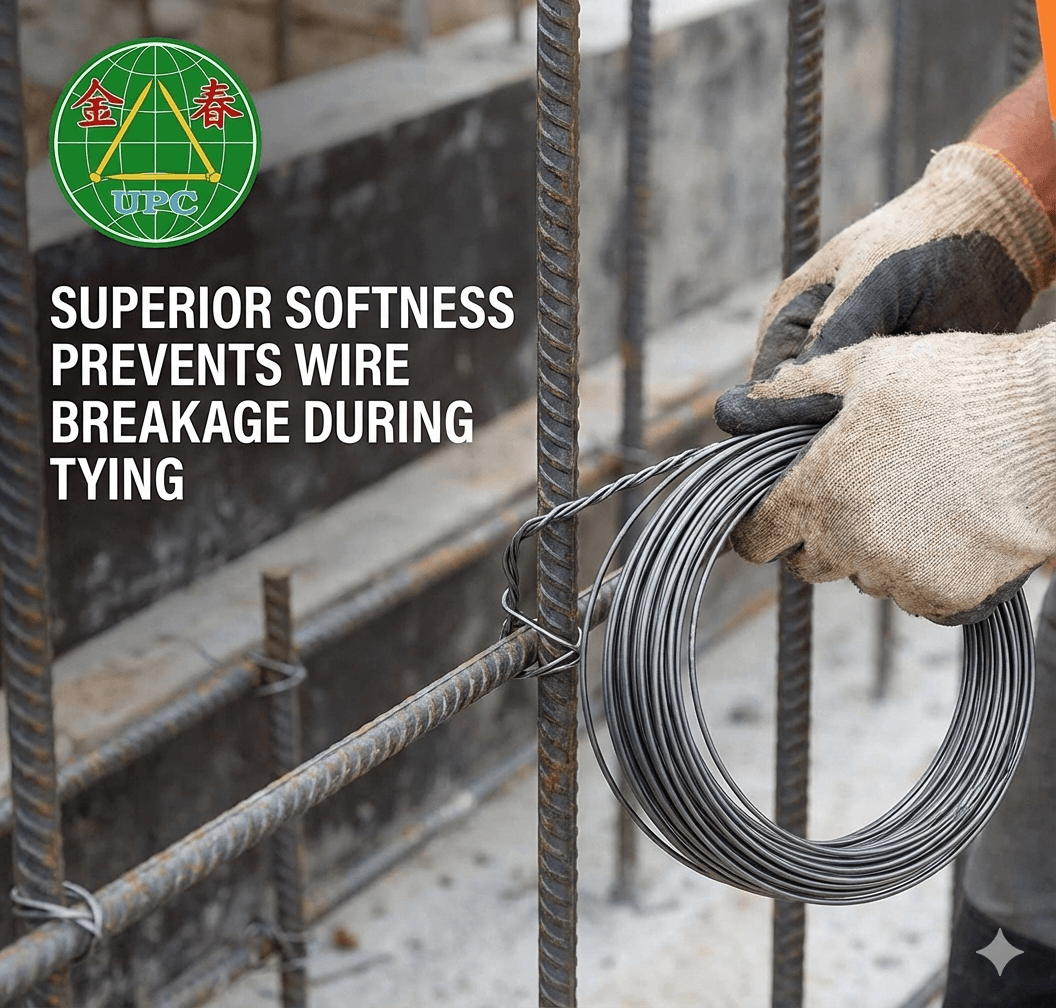
One of the most common causes of rebar binding failure is wire snapping during twisting. This typically occurs when wire is too hard or brittle.
High-quality annealed wire offers:
Smooth twisting without resistance
Minimal force required to form secure knots
Reduced stress concentration at twist points
Because the wire bends easily, it does not fracture under repeated twisting — even during high-volume tying work. This is especially important in cold weather, where low-quality wire becomes increasingly brittle.
When wire does not snap, workers can tie faster, cleaner, and with greater consistency — reducing failures at the very first stage of reinforcement installation.
2. Consistent Tensile Strength Keeps Rebar Secure During Concrete Pouring
Rebar ties do not carry structural loads, but they play a vital role in maintaining correct rebar positioning during concrete placement and vibration.
High-quality annealed wire provides:
Stable knot tension
Resistance to loosening under vibration
Reliable holding strength throughout the pour
Inferior wire may appear sufficient during installation but loosen when subjected to:
Concrete flow pressure
Mechanical vibration
Worker foot traffic
Equipment movement
When ties fail at this stage, rebar shifts from its intended position, leading to incorrect concrete cover or alignment issues — problems that are difficult and expensive to correct once concrete is poured.
Premium annealed wire maintains its grip, ensuring the reinforcement remains exactly where engineers designed it to be.
3. Uniform Diameter Ensures Reliable and Repeatable Ties
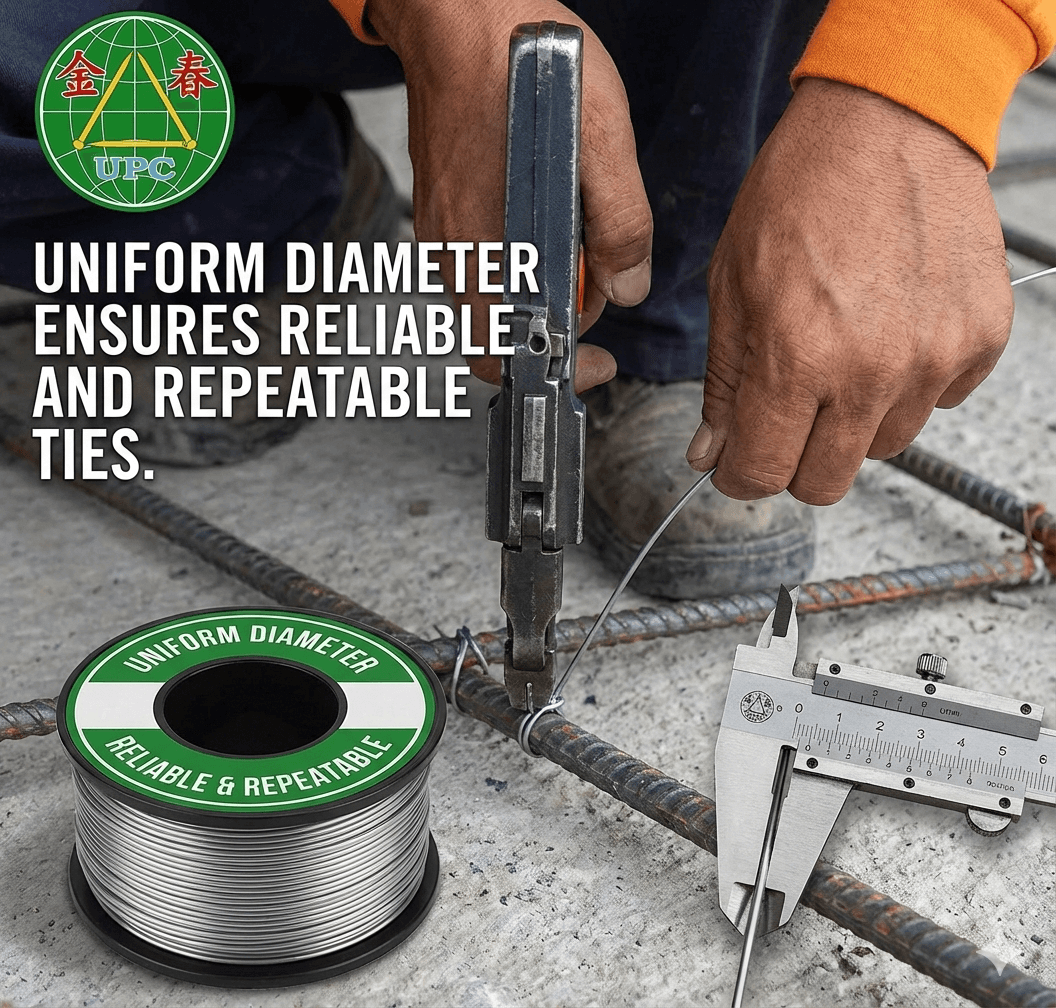
Another overlooked factor in rebar binding failures is inconsistent wire diameter. Variations in thickness can cause:
Uneven knot tension
Weak tie points
Difficulty feeding wire through tying tools
Increased breakage rates
High-quality annealed wire is produced using precise wire-drawing controls and strict quality inspection, ensuring:
Consistent thickness along the entire coil
Predictable behavior during twisting
Uniform performance across thousands of ties
This consistency is particularly important on large projects where inspection standards are strict. Inspectors often reject reinforcement work when ties appear loose, uneven, or inconsistent — even if the overall structure is sound.
Using premium annealed wire helps contractors meet quality requirements with confidence.
4. Improved Compatibility With Manual and Automatic Tying Tools
Modern construction sites rely increasingly on automatic rebar tying machines to improve speed and reduce labor fatigue. However, these machines are highly sensitive to wire quality.
High-quality annealed wire offers:
Smooth feeding through tying tools
Reduced tool jamming
Consistent knot formation
Lower machine wear
Poor-quality wire, especially wire with inconsistent hardness or surface defects, causes frequent machine malfunctions and weak ties. These issues often lead to improper knots that fail during inspection or concrete placement.
Even for manual tying with hooks or pliers, premium annealed wire allows workers to apply consistent tension with minimal effort — producing stronger, more reliable ties.
5. Reduced Worker Fatigue Leads to Fewer Installation Errors

Rebar binding is repetitive, physically demanding work. When workers struggle with stiff or brittle wire, fatigue increases — and with fatigue comes mistakes.
High-quality annealed wire reduces:
Hand and wrist strain
Time spent re-tying broken wires
Frustration and rushed work
When workers are comfortable, they work more carefully and consistently. This leads to:
Cleaner knot formation
Proper tie placement
Fewer missed or loose connections
In contrast, low-quality wire often causes rushed tying, skipped knots, or inconsistent tension — all of which contribute to binding failures.
6. Better Performance in Harsh Jobsite Conditions
Construction sites expose materials to challenging environments, including:
High humidity
Temperature fluctuations
Dust and debris
Mechanical stress
High-quality annealed wire performs reliably across these conditions. The controlled annealing process and clean surface finish help prevent premature degradation and unpredictable behavior.
Lower-grade wire may corrode faster, stiffen over time, or develop micro-cracks that lead to sudden failure. These issues often go unnoticed until ties begin to fail — usually at the worst possible time.
7. Fewer Inspections Failures and Costly Rework

Rebar installation is subject to inspection at multiple stages. Loose ties, broken knots, or visible inconsistencies often result in:
Inspection rejection
Rework orders
Project delays
Increased labor costs
By using high-quality annealed wire, contractors significantly reduce the risk of inspection-related issues. Clean, consistent, and secure ties demonstrate professionalism and adherence to construction standards.
In large-scale projects, preventing even a small percentage of rework can save thousands of dollars and keep schedules on track.
8. Long-Term Structural Confidence
While tie wire does not provide structural strength, it ensures the reinforcement system performs as designed. When rebar stays correctly positioned, concrete cures evenly, loads distribute properly, and long-term durability improves.
High-quality annealed wire contributes indirectly but critically to:
Proper concrete cover
Reduced cracking risks
Improved load transfer
Enhanced structural longevity
These benefits are especially important in infrastructure, high-rise, and seismic-resistant structures where precision matters.
Conclusion: Small Material, Big Impact
Rebar binding failures rarely attract attention — until they cause serious problems. In most cases, these failures are preventable with one simple decision: choosing high-quality annealed wire.
By offering superior softness, consistent strength, uniform diameter, and reliable performance, premium annealed wire helps contractors:
Prevent wire breakage
Maintain secure rebar positioning
Reduce labor fatigue
Avoid inspection failures
Minimize rework and delays
Deliver safer, more reliable structures
In modern construction, success depends on attention to detail. And when it comes to rebar binding, the quality of your annealed wire can make the difference between failure and flawless execution.
Contact information
UNITED NAIL PRODUCTS CO., LTD
Address: 16A8, Tra Noc Industrial Zone 1, Tra Noc Ward, Binh Thuy District, Can Tho City, VietNam
Phone: (+84) 986 831838; (+84) 292 242165
Email: sales5@unitednail.com
Thank you for reading this article, hope the information is useful to you