


MỤC LỤC BÀI VIẾT
Introduction: Why Innovation Matters in Nail Manufacturing
When people think of global construction, images of towering skyscrapers, vast highways, or megaprojects often come to mind. Yet beneath every steel beam, wooden panel, and roofing sheet lies an often-overlooked component: the nail. Nails, while small, are the backbone of structural integrity. For decades, the global nail manufacturing industry has been highly labor-intensive, relying on repetitive processes with little change. But as demand for quality, consistency, and affordability grows, the industry has been reshaped by automation and innovation.
📦 For buyers in Latin America, the U.S., or Europe, these changes are not abstract. They determine whether roofing projects avoid costly delays, whether suppliers can meet seasonal demand, and whether a construction distributor gains a competitive edge.
Vietnam has emerged as one of the most important centers for nail production, with particular strengths in roofing nails, wire nails, and specialized fasteners. Unlike older stereotypes of “low-cost but inconsistent” production, Nail Manufacturing in Vietnam now blends affordability with advanced technology. The result: faster production, lower defect rates, and flexible customization—all while maintaining price advantages compared to China, South Korea, or India.
This article explores how automation and innovation have transformed nail manufacturing in Vietnam, providing a detailed picture of why global buyers increasingly turn to Vietnamese factories.
Overview of Nail Manufacturing in Vietnam
Vietnam’s industrial landscape has evolved rapidly over the last two decades. Once considered primarily an agricultural economy, it is now a powerhouse in textiles, electronics, furniture, and—more quietly—fasteners. Nails account for a significant share of Vietnam’s HS 7317 exports (nails, tacks, staples, bolts). According to UN Comtrade, Vietnam exported over US$7 million worth of these products in 2023, with the U.S., Japan, and Mexico among key destinations.
⚙️ The country’s success in nail manufacturing is rooted in several structural advantages:
Competitive labor costs: Average monthly manufacturing wages hover around US$300, significantly lower than China’s US$600–700, providing room for price competitiveness.
Strategic location: Vietnam’s ports, including Cát Lái (Ho Chi Minh City), Cái Mép–Thị Vải, and Hải Phòng, give manufacturers direct access to shipping lanes to both the Pacific and Atlantic sides of Latin America.
Material availability: Access to steel coil suppliers and galvanizing plants ensures a consistent supply chain for nail producers.
Government support: Industrial policies encourage export-oriented manufacturing, with incentives for modernizing factories and meeting ISO standards.
Most importantly, Vietnamese factories have not remained stuck in outdated methods. Many have invested in Taiwanese, Japanese, or German machinery, shifting production from manual wire feeding and cutting to fully automated systems. This evolution has placed Nail Manufacturing in Vietnam in a new global spotlight.
The Shift Toward Automation 🤖
In the past, nail manufacturing was largely a manual process. Workers fed steel wire into machines, monitored cutting, headed, and shank formation, then sorted and packaged nails by hand. While this approach was sufficient for local markets, it created major problems when scaling for global demand: inconsistent shank thickness, head misalignment, rust due to improper galvanizing, and slower output.
Today, automation has revolutionized these challenges:
Wire Drawing and Straightening
Automated systems now ensure that every coil of wire is drawn to precise diameters, avoiding shank variations.
Sensors detect irregularities in tensile strength before production begins, reducing material waste.
Heading and Shank Formation
High-speed heading machines produce up to 1,200 nails per minute, compared to only 300–400 in semi-manual lines.
Automated lubrication systems reduce tool wear, lowering maintenance downtime.
Galvanizing and Coating
Robots and conveyor-based galvanizing tanks apply coatings evenly, achieving ASTM A153 or ISO-compliant thickness levels.
Electro-galvanizing lines now integrate with quality-control scanners, identifying weak plating before products are packaged.
Packaging
Instead of hand-counting nails into sacks or cartons, automatic packaging machines weigh, sort, and seal products—whether in branded consumer packs or bulk pallets.
📦 The result is that Vietnamese factories can now guarantee lower defect rates—often below 2%, compared to 8–10% in less automated competitors. For buyers, this means fewer rejects at ports, fewer delays on job sites, and stronger trust in supply chains.
Moreover, automation is not just about speed; it’s about flexibility. By upgrading to programmable machinery, factories can quickly switch from producing smooth-shank common nails to ring-shank roofing nails or specialty products. This adaptability makes Vietnam especially attractive for importers serving diverse construction markets in Latin America, where specifications vary by country.
Key Innovations in Production Technology ⚙️
The modernization of Nail Manufacturing in Vietnam extends far beyond just replacing manual labor with faster machines. It involves a holistic adoption of digitalization, robotics, and lean manufacturing techniques that optimize efficiency across the entire production chain.
Some of the most impactful innovations include:
Computer Numerical Control (CNC) Machines
These allow nail dimensions (length, shank diameter, head type) to be programmed with precision. A batch of smooth-shank nails can quickly shift to ring-shank roofing nails without lengthy retooling.

Vision-Based Quality Control
Advanced cameras monitor nails at high speeds, scanning for defects like bent shanks or incomplete heads. Defective items are automatically rejected, preventing defective shipments.IoT-Enabled Machines
Many factories are adopting Internet of Things sensors, allowing managers to track production data in real time—such as cycle counts, downtime, or energy use. This data-driven approach reduces bottlenecks and enhances transparency for buyers.AI-Powered Maintenance
Predictive maintenance systems analyze vibration and temperature data to predict when machines require servicing. This minimizes costly breakdowns and keeps production continuous.
🤖 In essence, these technological leaps mean that nail factories in Vietnam are no longer “cheap production hubs” but globally competitive manufacturers capable of meeting strict compliance requirements in the U.S., EU, and Latin America.
Raw Material Handling and Quality Consistency
One of the greatest challenges in nail manufacturing is ensuring raw material consistency. Variations in steel coil quality can directly affect shank hardness, nail bending resistance, and corrosion durability.
📦 Vietnamese factories address this through:
Pre-Production Testing: Wire coils undergo tensile, hardness, and chemical composition testing before entering production.
Automated Wire Storage Systems: Smart warehouses monitor humidity and temperature to prevent rusting or weakening of steel coils.
Batch Traceability: Every coil is assigned a batch number, allowing manufacturers to trace problems back to suppliers. This traceability reassures buyers who face strict warranty obligations.
The result is a consistent product that meets ASTM, JIS, and EN standards across shipments—minimizing risks for international contractors.
Galvanizing & Coating Advances
Roofing nails are only as strong as their resistance to rust. In humid climates like Mexico, Peru, or Brazil, poorly galvanized nails can corrode within months, causing roof leaks and costly repairs.
⚙️ Vietnam’s innovation in galvanizing processes gives it a strong edge:
Electro-Galvanizing: Thin zinc layers applied for smooth finishes—ideal for consumer-packaged nails.
Hot-Dip Galvanizing: Heavier zinc coatings up to 70 μm, meeting ASTM A153 standards, offering superior durability for roofing applications.
Colored Coatings: Some factories offer polymer coatings in red, black, or silver, matching local roofing preferences in Latin America.
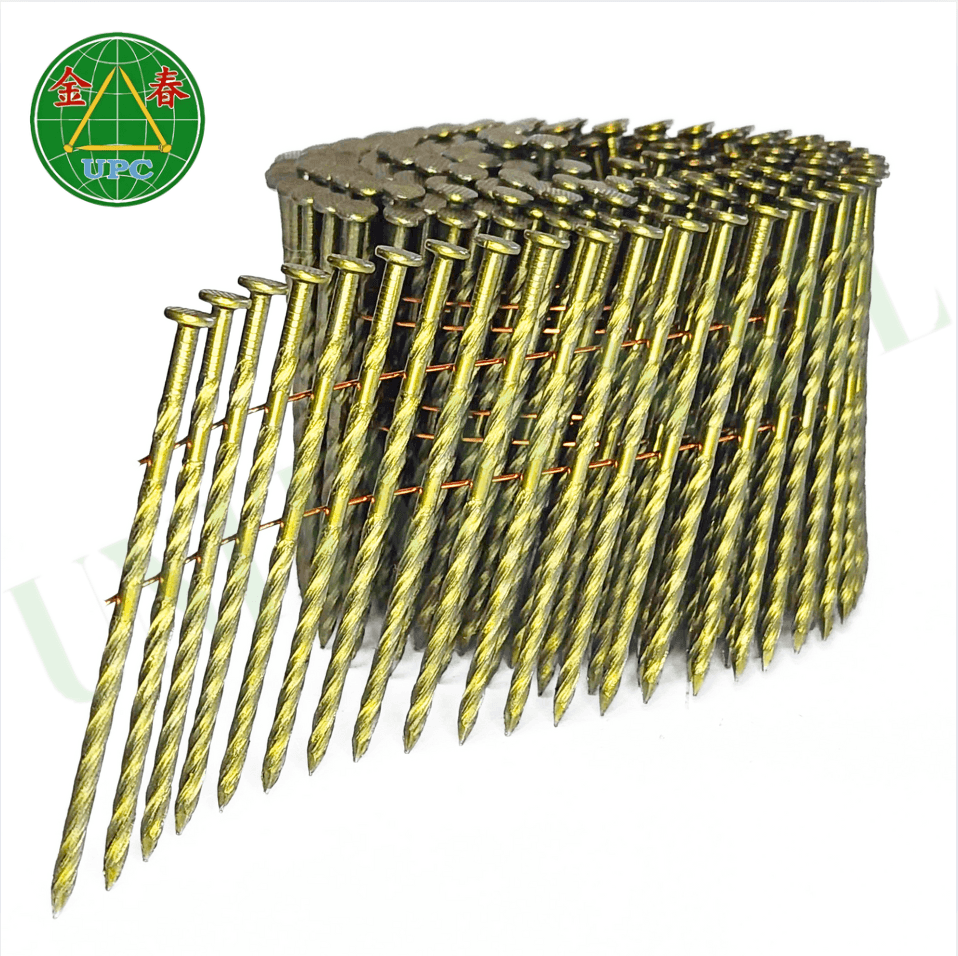
Coil Pallet Nails 2-1/2″ x 0.131 (3.3x64mm Crew)
With these improvements, Vietnamese factories can guarantee lifespans of 15–20 years for roofing nails under standard use—something not always achieved by lower-quality suppliers.
Energy Efficiency and Sustainable Practices 🌱
Sustainability is increasingly a factor for global procurement. Buyers in Europe and the Americas now ask not only “How much does it cost?” but also “How green is the supply chain?”
Vietnamese nail manufacturers are adopting practices such as:
Energy-Efficient Furnaces: Modern galvanizing lines reduce energy use by up to 20%.
Wastewater Recycling: Galvanizing plants install treatment systems to prevent zinc contamination.
Solar-Powered Facilities: Some factories in southern Vietnam have installed rooftop solar panels, cutting electricity bills and emissions.
🌱 These steps not only appeal to eco-conscious buyers but also reduce operating costs, making Vietnam’s pricing advantage even more compelling.
Workforce Transformation: From Manual to High-Tech
Automation does not eliminate people; it transforms their roles. In Vietnam’s nail industry, workers who once manually cut wire or sorted nails are now trained as machine operators, quality inspectors, and logistics coordinators.
Upskilling Programs: Factories partner with technical colleges to train employees in mechatronics and digital production.
Safety Improvements: Automated handling reduces workplace injuries caused by repetitive heavy lifting.
Retention Benefits: Better working conditions and skill development reduce turnover, ensuring production stability for global buyers.
📦 For importers, this translates into fewer delays caused by labor shortages or strikes, issues that sometimes affect other regions.
Case Study: A Vietnamese Factory’s Automation Journey 📦
Consider United Nail Products Co., Ltd, a major Vietnamese exporter with 25 years in the industry. Historically, the factory relied on semi-automated machines, producing about 200 tons of nails monthly.
After a 2020 investment in fully automated heading and galvanizing lines:
Output increased to 500+ tons monthly.
Defect rates dropped by 30%.
Packaging flexibility expanded, offering branded cartons, buckets, or pallets for Latin American clients.
Energy consumption per ton fell by 12% thanks to upgraded furnaces.
🚀 This transformation allowed United Nail to not only expand to the U.S. and Canada but also win contracts in Mexico, Chile, and Peru—markets that demand strict quality and delivery standards.
Comparison with China and Other Competitors
Vietnam inevitably faces comparisons with China, the global leader in fasteners. However, automation has narrowed the gap while maintaining cost advantages.
China: Larger scale, but rising labor costs (+10% annually). Buyers sometimes complain of inconsistent quality due to overloaded suppliers.
South Korea: High-quality output but significantly higher prices.
India: Competitive prices but less advanced automation, leading to higher defect rates.
⚙️ Vietnam strikes the balance: competitive pricing (10–15% cheaper than China) and strong automation-driven quality. This unique positioning is why Nail Manufacturing in Vietnam continues to gain market share.
Logistics & Export Readiness 🚢
Automation is useless if products don’t reach customers on time. Fortunately, Vietnam’s logistics infrastructure has kept pace with its factories.
Port Access: Cát Lái, Cái Mép–Thị Vải, and Hải Phòng connect directly to Mexico, Chile, and Peru.
Transit Times: Ho Chi Minh to Manzanillo, Mexico averages 38–42 days.
Customs Efficiency: Vietnam’s National Single Window reduces clearance times to 3–5 working days.
📦 Automated warehouses and EDI (Electronic Data Interchange) ensure importers receive real-time tracking—critical for just-in-time construction projects.
Cost Advantages of Automation in Vietnam
Automation not only improves quality but also reduces cost:
Labor Savings: One machine operator can oversee multiple automated lines.
Material Efficiency: Sensors prevent waste by detecting coil inconsistencies early.
Lower Returns: Fewer defective shipments reduce costs linked to claims and refunds.
When spread across thousands of tons annually, these savings allow Vietnamese exporters to offer prices 10–15% lower per unit compared to China, without cutting corners.
Market Trends in Roofing and Construction Nails 🏗️
The roofing nail segment is particularly important for Vietnam. In 2023, Vietnam ranked 3rd globally in roofing nail exports, accounting for ~7% of shipments.
Trends driving this growth include:
Rising construction demand in Mexico, Peru, and Brazil.
Preference for galvanized nails due to humid climates.
Distributor demand for branded consumer packaging.
🏗️ These factors align perfectly with Vietnam’s strengths: high-quality galvanized nails, competitive costs, and flexible packaging.
Challenges and Future Outlook 🚀
Despite its success, Vietnam’s nail industry faces challenges:
Raw Material Dependence: Steel coils are partly imported, exposing factories to global price volatility.
Rising Wages: Although still cheaper than China, labor costs are rising.
Sustainability Demands: Buyers increasingly require carbon footprint reporting, which many factories are still developing.
🚀 However, ongoing investments in renewable energy, smarter logistics, and advanced coating technologies position Vietnam strongly for the future. Analysts expect Vietnam’s share of global nail exports to grow by 5–7% annually through 2030.
Conclusion: Why Vietnam Leads the Next Wave of Nail Manufacturing
Automation and innovation have fundamentally reshaped Nail Manufacturing in Vietnam. What was once a low-cost, labor-driven sector is now an advanced, technology-enabled industry that competes with global leaders.
📦 Lower costs from efficiency
🤖 Superior quality through automation
⚙️ Flexibility in customization and packaging
🚀 Reliable logistics and sustainability efforts
For Latin American, North American, and European buyers, Vietnam offers not just nails, but a partnership built on modern manufacturing, compliance, and long-term competitiveness.
The message is clear: The future of nail manufacturing is no longer only in China. Vietnam is carving its place as the innovation-driven alternative.
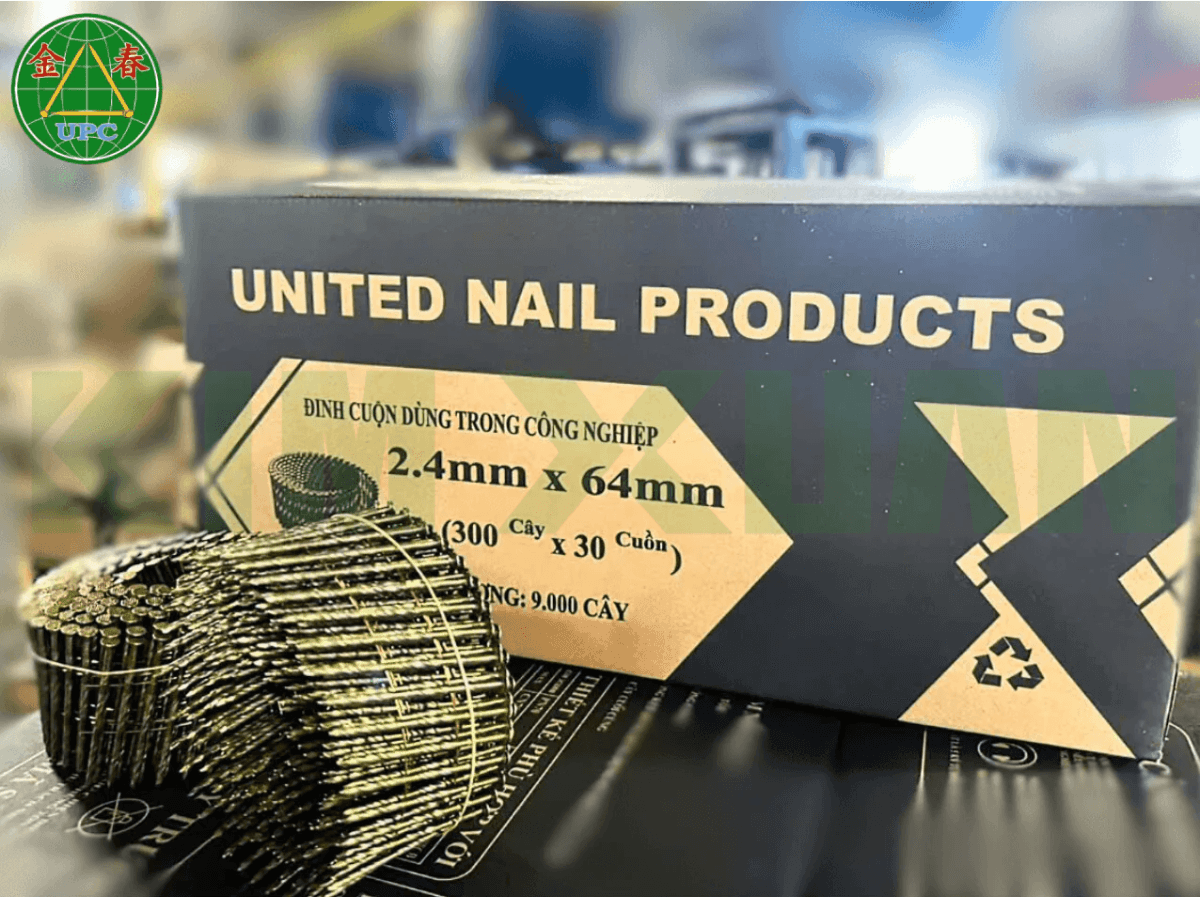
Contact Information
UNITED NAIL PRODUCTS CO., LTD
Specializing in high-quality nails and small coil wire production
Thank you for taking the time to read this article. We hope the information proves helpful to you.